In a nutshell
- 🧪 Vinegar’s acetic acid (pH 2–3) rapidly dissolves mineral haze and limescale, loosening grime in about 30 seconds for streak-free glass.
- 🧴 Best mixes: 1:1 vinegar to water for light haze; 2:1 for hard-water spots; add a tiny drop of washing-up liquid only for greasy films.
- 🪟 Technique matters: light mist, 30–60 sec dwell, wipe with clean microfibre, then squeegee or dry buff; avoid direct sun to prevent rapid evaporation.
- ⚠️ Know the limits: vinegar struggles with heavy grease, adhesives, silicone and paint; avoid on marble/limestone and spot-test tints or low‑E coatings.
- 💡 Pro tips: use distilled water to prevent new spots, pre-rinse heavy grit, and cross-hatch your wipe to expose streaks instantly.
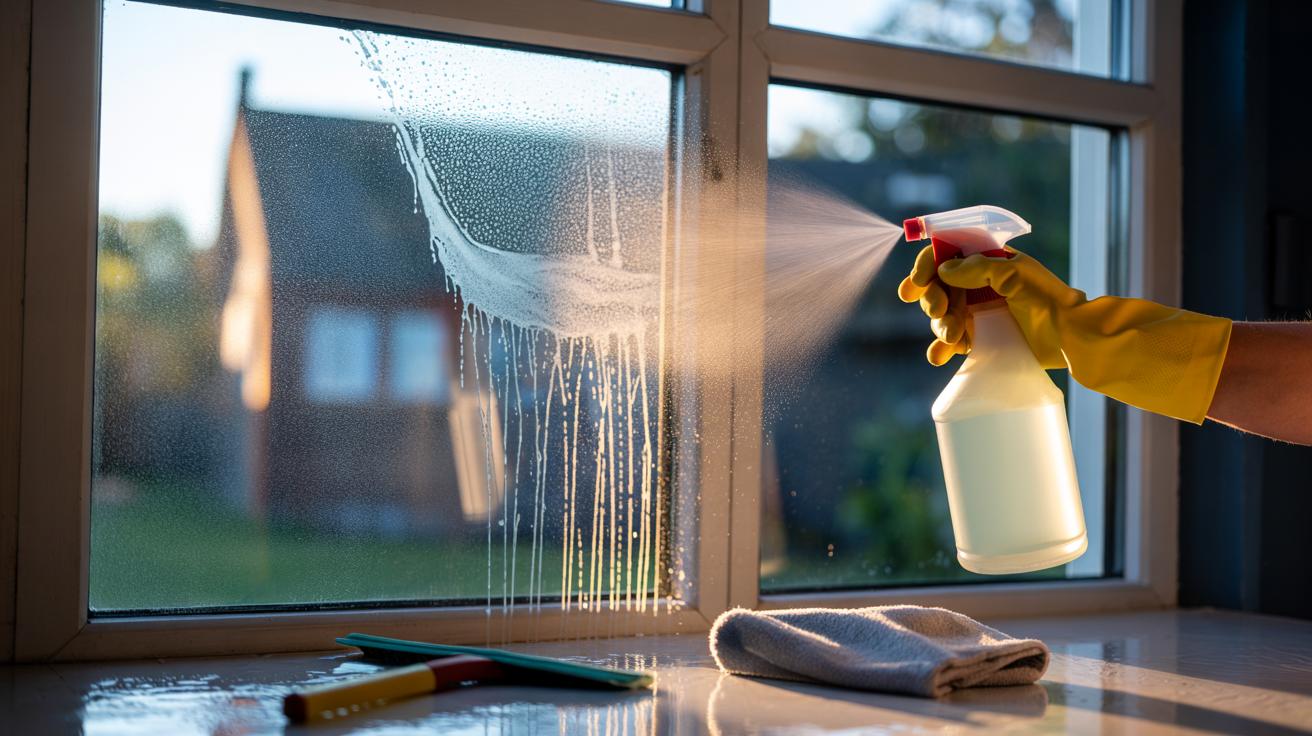
There’s a reason so many British households keep a bottle of vinegar beneath the sink. On glass, it’s fast, frugal and surprisingly scientific. When you mist a window with a simple vinegar spray, dulling films and mineral haze begin to loosen almost immediately. Wait half a minute. Wipe with a clean microfibre cloth or squeegee. The pane flashes clear. The headline claim holds: in around 30 seconds, the chemistry behind vinegar starts dissolving the kind of dirt that makes windows look tired and streaky. Here’s how it works, how to mix it, and when to reach for something else.
The Chemistry Behind Vinegar’s Speed
Household vinegar is a dilute solution of acetic acid in water, typically 5–8%. On glass, its power lies in two things: acidity and ion capture. Many window dulling agents are alkaline or mineral in nature—think limescale from hard water, soap scum, or the carbonate haze that dries after a rainy, dusty day. Vinegar’s pH 2–3 solution reacts with these deposits, converting them into soluble salts and carbon dioxide, which are easily wiped away. It also forms weak complexes with calcium and magnesium ions, helping lift residues that pure water merely smears.
There’s a physical effect too. The solution wets glass more evenly than plain water, so it penetrates microscopic pits where grime clings. That’s why a light mist can act fast. Give it a brief dwell—about 30 seconds—and you’ll see stubborn haze soften, letting the cloth do its job instead of grinding grit across the pane. For organic films such as cooking vapours or city soot, a tiny dash of washing-up liquid in the vinegar mix improves wetting and loosens oily bonds without leaving surfactant streaks.
How to Mix and Use a Vinegar Spray
For routine window cleaning, blend white distilled vinegar and warm water 1:1 in a trigger bottle. Swirl gently to mix. Warmth speeds reactions slightly and helps the solution spread. Spray a light, even film—don’t soak. Let it dwell for around 30 seconds, then wipe vertically with a clean microfibre cloth, followed by a horizontal buff using a second, dry cloth. This cross-hatch method reveals any missed streaks instantly. Avoid full sun, which accelerates evaporation and can leave marks before the chemistry has finished its work.
If you’re tackling tougher hard-water spots, step up to a 2:1 vinegar-to-water mix and extend dwell time to a minute. Add one small drop of washing-up liquid per 500 ml only when oily films are obvious; more isn’t better, it’s streakier. Always test on edges first if your glazing has specialist coatings or tinting. For best results, finish with a squeegee from top to bottom, wiping the blade between pulls to prevent track marks and returning minerals to the pane.
| Target Soil | Mix Ratio (Vinegar:Water) | Dwell Time | Notes |
|---|---|---|---|
| Light haze, daily dust | 1:1 | 30 seconds | Buff with dry microfibre |
| Hard-water spots, limescale | 2:1 | 45–60 seconds | Work in shade; squeegee finish |
| Greasy film, cooking vapour | 1:1 + tiny detergent drop | 30–45 seconds | Rinse wipe to remove surfactant |
What It Dissolves and What It Doesn’t
Vinegar excels against alkaline residues and minerals: dried tap water, soap scum, cement dust traces, and the faint gritty film that keeps glass looking grey even after a wipe. It also disrupts light nicotine film and traffic grime when these are bound with mineral content. That’s the 30-second magic—fast acid-base action where it counts. When the soil is mainly mineral, vinegar wins. But some contaminants are different beasts. Heavy grease, adhesive labels, silicone residue and paint flecks don’t respond much to mild acid; they need solvents, dedicated removers or careful mechanical removal with a plastic scraper.
Mind the surface. Avoid vinegar on marble, limestone, and other calcareous stone sills—it etches. Be cautious with tinted films, low-E or self-cleaning coatings; spot test, as repeated acid exposure may dull or damage specialist layers at the edges. If windows are extremely dirty, pre-wash with warm water to float grit before spraying, reducing the risk of micro-scratches. Finally, use lint-free cloths and clean water; vinegar can’t compensate for a filthy rag or chalky tap water leaving fresh spots as it dries.
For a bottle that costs pennies, the performance is striking. The science is sound, the routine is simple, and the results are crisp, especially in hard-water regions where limescale rules the roost. Thirty seconds isn’t a gimmick—it’s the moment the acid has broken the bond between glass and grime. Want to push it further? Try distilled water in your mix, a squeegee finish, and two-cloth buffing for camera-lens clarity. What’s your next test: a bathroom mirror fogged with soap scum, a kitchen window kissed by greasy steam, or the patio doors catching every splash of rain?
Did you like it?4.5/5 (27)