In a nutshell
- 🧪 Crumpled foil creates thousands of micro-abrasive ridges; its malleability keeps edges renewing, lifting grime on tough surfaces like chrome and stainless steel without deep scratches.
- ⏱️ The 60-second method: wet with hot water + washing-up liquid, scrub in tight circles, re-crumple for fresh edges, finish with a linear pass, then rinse and dry—letting surfactants and steady pressure do the work.
- 🧭 Use on chrome fittings, grill grates, oven racks, and enamel exteriors; avoid non-stick coatings, soft plastics, lacquered/painted trims, anodised aluminium, and mirror-polished steel—always patch-test first.
- 🧯 Boost results with cola or a vinegar mix for rust, add bicarbonate of soda for gentle grit, and mind safety: never mix bleach with acids, ventilate, and reuse/recycle foil when possible.
- 📊 Compared with alternatives, foil is Very Fast (≈60 s) with Low–Medium risk; steel wool is aggressive but scratch-prone, while microfibre is safest yet slower on tough deposits.
Need a gleaming finish fast? The humble ball of aluminium foil is a surprisingly deft cleaner, ripping through burnt-on bits and rusty blooms with minimal fuss. In kitchens and sheds across the UK, it’s an unsung, low-cost standby. The secret isn’t magic. It’s materials science. Foil is soft, shape-shifting and studded with edges when crumpled, so it grips grime without gouging most hard surfaces. In 60 seconds, the right technique converts stubborn deposits into rinse-away residue. Here’s how and why it works, where to use it, what to avoid, and the clever pairings that make this speedy hack even faster—without sacrificing safety or finish.
How Crumpled Foil Bites Into Grime
Aluminium foil wins because it’s both soft and sharp. Crumple it and you create thousands of tiny ridges and pressure points. Those micro-edges act as a micro-abrasive, concentrating force into flecks and fissures of baked-on grease or light rust. Unlike harsh scouring pads, foil’s malleability means the ridges constantly reform as you scrub, refreshing their bite without carving deep scratches into tough substrates like chrome, stainless steel or enameled iron. The metal’s oxide skin is mildly polishing, so it helps smooth after it lifts.
There’s tribology at play too: as you move the ball, friction dislodges debris while water or detergent lubricates the surface, lowering the risk of scouring tracks. The foil compresses to match contours—curved taps, grill grates, pot rims—so contact stays high and effort stays low. Because the edges renew with each fold, a small foil ball keeps cutting efficiently for the entire minute. The result is brisk, controlled abrasion that breaks the bond between stain and substrate, then burnishes just enough to restore a clean, even sheen.
The 60-Second Method: Step-by-Step Science
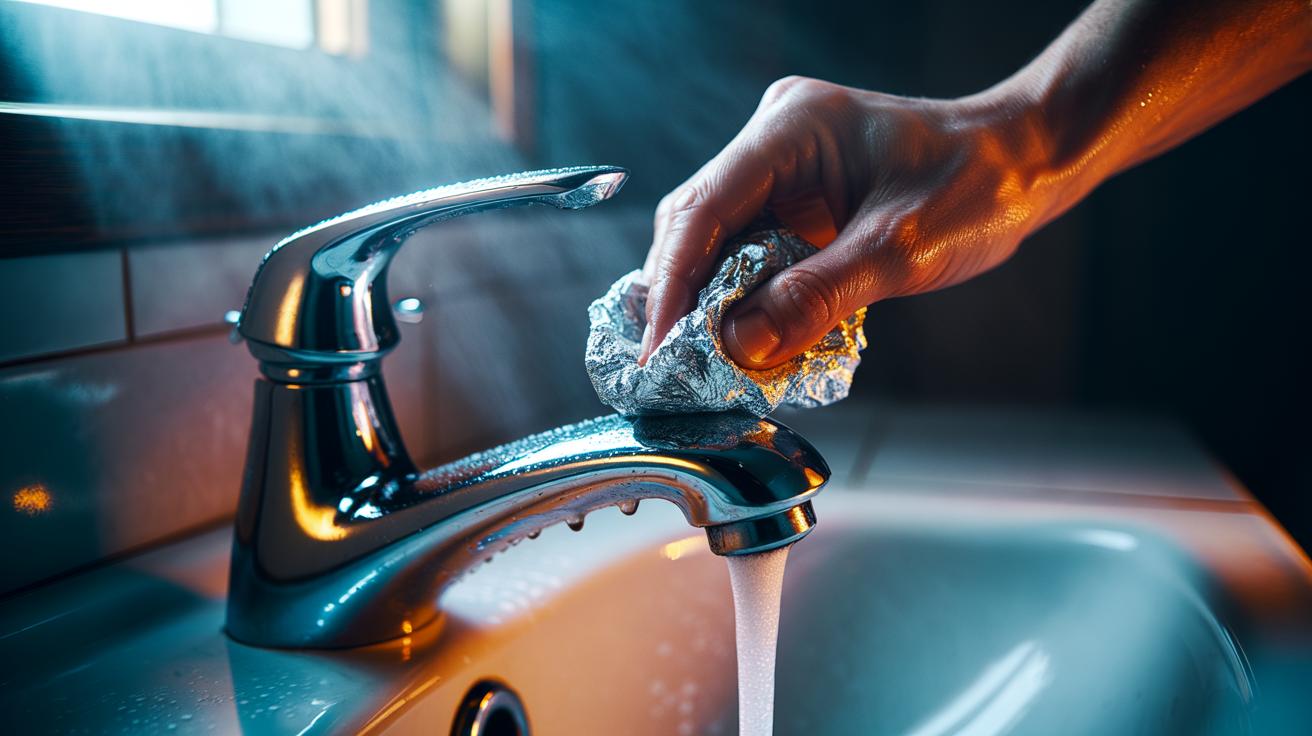
Start with moisture. A spritz of hot water and a dab of washing-up liquid cut the surface tension so cleaner seeps under the grime. Crumple a palm-sized ball of foil—tight enough to hold shape, loose enough to keep ridges. Scrub in small circles for 20 seconds, re-crumple to expose fresh edges, then repeat on the remaining area. Finish with a quick linear pass to align any fine marks. Rinse and towel dry. Time your scrub: one focussed minute removes more residue than five lazy ones. The trick is steady pressure, not brute force, letting the foil, water and surfactant do the heavy lifting.
Why so quick? Surfactants sneak under grease and oxidised films, weakening their grip. The foil’s micro-edges shear those films at multiple points simultaneously, increasing the “attack surface”. Short bursts build a little heat at the interface, softening residues without warping metal. Re-crumpling exposes new cutting ridges, preventing glazing. On slightly rusty chrome, a splash of fizzy cola introduces mild acids and carbonation, encouraging galvanic action between iron oxides and the aluminium to break the rust layer, which the foil then lifts. The synergy compresses what used to be a tedious chore into a tidy 60-second routine.
Where Foil Shines—and Where It Shouldn’t
Foil excels on hardy, non-coated surfaces: chrome fittings, bike spokes, steel grill grates, oven racks, enameled cast iron exteriors, and some stainless appliances if you work with the grain. It’s brilliant for edge clean-ups where sponges skid. But it’s not universal. Skip it on non-stick coatings, soft plastics, lacquered or painted trims, mirror-polished steel, anodised aluminium cookware, and delicate glass ceramics. If you’re unsure, patch-test in a hidden corner and check under bright light. The goal is controlled abrasion, not collateral damage.
| Tool | Best Targets | Risk Level | Speed on Tough Spots |
|---|---|---|---|
| Crumpled Foil | Chrome, grill grates, oven racks | Low–Medium (avoid coatings) | Very Fast (≈60 s) |
| Steel Wool | Raw steel, heavy rust | High (scratches, shedding) | Fast |
| Microfibre + Spray | Glass, painted finishes | Low | Moderate |
On chrome with freckles of rust, a few drops of cola or a vinegar-and-water mix boosts the reaction; keep the dwell time short and rinse well to avoid residue. For stainless, test first and follow the brushed direction to minimise visible trails. Avoid pairing foil with strong ammonia or bleach blends, and don’t soak aluminium cookware in acidic solutions while scrubbing—prolonged acid contact can stain or darken surfaces. Used judiciously, foil punches above its weight without marring your kit.
Smart Pairings and Quick Upgrades
Upgrade the 60-second clean with simple pairings. A dab of washing-up liquid plus warm water handles grease; a pinch of bicarbonate of soda adds gentle grit for baked sugars. On chrome, cola’s fizz helps lift rust blooms; on grill grates, a hot pre-wipe softens carbonised fat, so the foil skims instead of drags. Wrap foil around a wooden spoon to reach tight corners, or pinch a smaller ball for tap bases and hob edges. Re-crumple every 15–20 seconds to reveal fresh cutting ridges and keep the pressure consistent. Finish with a dry cloth and, on bare steel, a whisper of oil to deter new oxidation.
Think sustainability too. Reuse a clean sheet of cooking foil after food prep, then recycle once it’s too crumpled to bite. Wear light gloves if you’re tackling oven racks or chemical helpers, and ventilate the area. Never mix bleach with acids, and keep foil away from energised electrics. Rinse surfaces thoroughly to remove loosened particles and residues. If in doubt, test, check, then commit. Small adjustments—correct ball size, right lubricant, disciplined timing—turn a hack into a reliable, repeatable method that rescues finishes in under a minute.
Aluminium foil doesn’t work miracles; it applies smart physics. A soft metal, constant micro-edges, and the right lubricant combine to cut, lift and lightly polish in one motion. That’s why your taps gleam, your racks de-gunk, and your weekends run smoother. With a trained hand, it’s quick, cheap and surprisingly gentle on the right materials. Use it where it shines, avoid where it bites, and you’ll bank results in 60 seconds flat. Where will you try the foil trick first, and what surface are you most curious to rescue without resorting to harsher abrasives?
Did you like it?4.5/5 (26)