In a nutshell
- 🧪 The science: baking soda (sodium bicarbonate) is amphoteric, buffers pH and adsorbs VOCs, cutting odours fast as moisture aids contact within 5 minutes.
- ⚡ Quick method: Lightly sprinkle 10–30 g/m², wait 5 minutes without foot traffic, then vacuum slowly with a sealed HEPA machine; never add water to avoid clumping.
- 📏 Practical dosing: Use a shaker for even coverage; ventilate, brush lightly on fibre tips, and clear vacuum bags/filters to maintain airflow and capture fine particles.
- 🚫 Limits and myths: For pet urine, smoke, or deep mustiness, extend dwell and pre-treat with an enzyme cleaner; skip the vinegar+bicarb fizz, which simply neutralises and does not clean.
- 🌿 Safety & sustainability: Generally non-toxic and fragrance-free, suitable for sensitive noses; test delicate wool/dyes, avoid dust clouds, store airtight, and replace aerosol deodorisers with this low-impact staple.
There’s a humble hero sitting in the baking aisle that can rescue a tired carpet faster than you can brew a cuppa. Baking soda — or sodium bicarbonate — doesn’t mask odours; it tackles them at the source, swiftly and quietly. In busy British homes, where muddy boots, wet dogs, and last night’s curry collide, speed matters. Five minutes can change a room. The science behind that speed is simple yet clever, and the technique is refreshingly low-effort. Sprinkle, wait, vacuum. Done. Used properly, baking soda can deliver a perceptible freshness lift in just five minutes, turning a living space from slightly stale to crisply breathable with nothing more than a light dusting and a patient pause.
The Science of Neutralisation in Five Minutes
At the heart of baking soda’s power is its amphoteric nature. As sodium bicarbonate, it can react with both acids and bases, buffering pH and neutralising the reactive groups in many malodorous molecules. Think of spilled coffee acids, tangy cooking emissions, and sweaty amines. By meeting these compounds on the carpet’s surface, bicarbonate shifts their chemistry, reducing their volatility and, crucially, their smell. Add another win: the powder’s crystalline structure presents vast surface area for adsorption, pulling volatile organic compounds (VOCs) into countless microscopic nooks where they’re less able to escape into the air.
Time matters because molecules move. In five minutes, billions of odour molecules collide with the powder, many sticking or reacting, while ambient humidity helps dissolve thin films on fibres so bicarbonate can reach them. That brief contact window is often enough to quiet everyday odours dramatically, even before a deep clean. There’s also a physical effect: fine particles wedge into the upper fibre pile, intercepting airborne compounds that would otherwise keep evaporating. The result is rapid perceived freshness, particularly for light-to-moderate smells lingering after cooking, commuting, or damp weather.
Quick Method for a Five-Minute Refresh
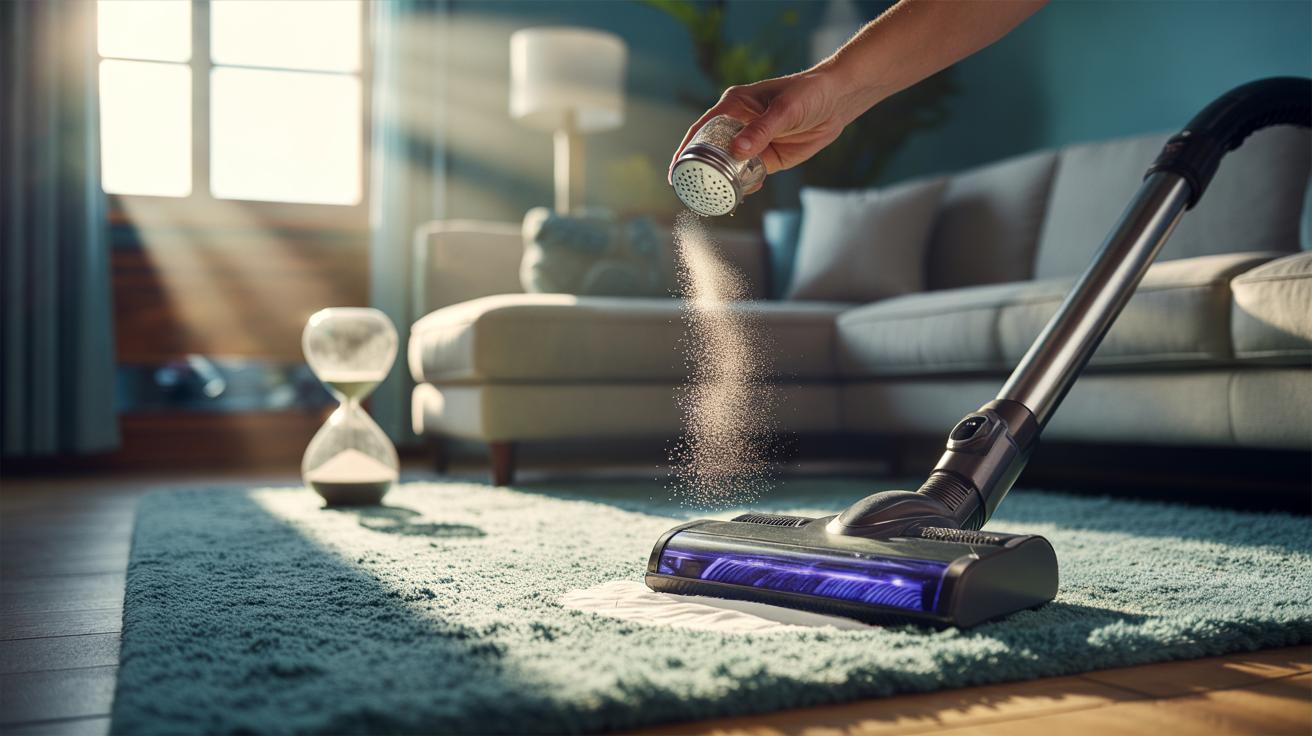
Keep it simple. Open a window for a touch of ventilation. Shake a light, even coating of baking soda across the carpet — no mounds, no paste. For routine freshness, aim for roughly 10–20 g per square metre; for stronger odours, up to 30 g. Set a timer for five minutes. Don’t tread on it. Let chemistry and contact do the work. Then vacuum with a well-sealed unit — ideally a HEPA machine — using slow, overlapping passes to pull up the powder and anything it’s captured. Do not add water: wet bicarbonate can clump, cake, and cling, and it may trap residues deeper in the pile.
For quick planning, use this simple guide.
| Carpet Area | Baking Soda Amount | Dwell Time | Best Use |
|---|---|---|---|
| Runner (2 m²) | 20–40 g | 5 minutes | Post-commute damp smells |
| Lounge (12 m²) | 120–240 g | 5–10 minutes | Lingering food odours |
| Rug (4 m²) | 40–80 g | 5 minutes | Pet traffic freshness |
Two small extras elevate results. First, a gentle hand-brush can settle powder onto the fibre tips without pushing it deep. Second, empty or replace vacuum bags/filters promptly; fine particles can bog down airflow. Keep pets and toddlers away during dwell time, and store unused powder in an airtight container to avoid clumping on damp days.
When Five Minutes Isn’t Enough
Some odours sit stubbornly below the surface. Pet urine that has wicked into underlay, stale tobacco, or flood mustiness are notorious dwellers. In these cases, extend contact: 30–60 minutes, even overnight for rugs you can lift and shake. For organic accidents, use an enzyme cleaner first to break down the source; once dry, dust with baking soda and vacuum. Baking soda is a deodoriser, not a stain remover, and it cannot fix contaminated underlay or mould. If odour returns within hours, the source likely lives beneath the backing and warrants professional extraction or underlay replacement.
Avoid the classic internet myth: pouring vinegar onto baking soda on the carpet. They neutralise each other and simply fizz, creating sodium acetate, water, and carbon dioxide — theatrical, but not cleaning. If you want vinegar’s descaling benefit on hard floors nearby, fine. Just keep it away from carpets until they’re dry and free of bicarbonate. For delicate fibres such as wool and silk, test a hidden patch; while bicarbonate is generally safe, aggressive brushing and wetting are not. And remember that very heavy coverage can be hard to vacuum from long-pile or shag textures.
Safety, Fibres and Sustainability
Household sodium bicarbonate is non-toxic and fragrance-free, which helps hay fever sufferers and anyone sensitive to synthetic perfumes. Still, a fine powder is a fine powder: avoid vigorous dumping that creates dust clouds, and consider a simple dust mask if you’re sensitive. Keep the tub out of reach of curious pets; while small traces are harmless, deliberate snacking isn’t ideal. For equipment, use a vacuum with good seals and an intact HEPA filter, and tap out brushes afterward to prevent gradual build-up.
There’s an eco case too. Bicarbonate is abundant, inexpensive, and low-impact in use; it replaces single-use aerosol deodorisers and avoids heavy fragrance loads. Store it airtight to prevent moisture uptake and caking, and decant into a shaker for even coverage and reduced waste. On fibre care, stick to a light sprinkle for wool and test first for dyes on richly coloured hand-knotted rugs. Gentle, dry application paired with thorough vacuuming leaves freshness without residues, protecting fibres and keeping maintenance honest, simple, and affordable over time.
In a world crowded with sprays and scented promises, baking soda earns its place through brisk, unfussy performance. It calms everyday odours in minutes, costs pennies, and doesn’t shout with perfume. Use it lightly, let it sit, vacuum cleanly. Then breathe. For deeper issues, bring enzymes, time, or a professional. But for instant carpet composure, this is the pantry trick that delivers. How might a five-minute baking soda refresh fit into your weekly routine, and which room in your home would feel the difference first?
Did you like it?4.6/5 (25)