In a nutshell
- 🌿 A one-hour banana peel soak releases potassium and trace minerals into water, creating a gentle, fast-acting tonic for drooping plants.
- 🧪 The science is simple diffusion: ions seep from chopped peel into lukewarm water, offering a modest boost to stomatal function, water balance, and resilience.
- 🧴 Method: rinse and chop peel, steep in 500 ml water for 60 minutes, strain well, then apply as a 1:1 diluted soil drench or fine foliar spray within 24 hours.
- 🌹 Best for nutrient-hungry containers—tomatoes, peppers, roses, and common houseplants—especially during mild potassium deficiency or mid-season lulls.
- ⚠️ Not a complete feed: low in nitrogen; avoid burying peels in pots; use balanced fertiliser or compost for broader needs and stop if leaves scorch or pests appear.
Gardeners swear by bananas for energy. Your plants might benefit too. A simple peel, a jar, and an hour can produce a mild, fast-acting tonic that perks up tired leaves and edges. It won’t replace a full feed, yet it works as a quick assist when growth stalls or foliage looks lacklustre. The trick is in speed: soluble compounds slip from the peel into water, then into soil or onto leaves. Done right, it’s low-cost, low-waste, and surprisingly reliable. Used sparingly, this homemade brew can revive drooping houseplants and give flowering favourites a gentle nudge. Here is how and why it works, plus when to use it.
The Science Behind the One-Hour Soak
Banana peels are rich in potassium, with traces of phosphorus, calcium, and magnesium. Much of that goodness sits in forms that water can access quickly. When you submerge chopped peel in clean water, an immediate diffusion gradient forms. Ions begin moving from a peel’s moist cells into the liquid. Stirring speeds things up. Warm (not hot) water helps too. Within just 60 minutes, a measurable amount of potassium can seep into the water, producing a gentle, plant-safe tonic. It’s not a miracle potion. It’s chemistry—fast, but modest.
Why does this “hour rule” matter? Potassium supports stomatal function, water balance, and disease resilience. Plants that are potassium-hungry often show crispy leaf edges and weak stems. A light top-up makes a visible difference without overwhelming roots. However, peels are not significant nitrogen sources. So growth spurts will be limited unless you also supply a balanced fertiliser. Think of the peel brew as a quick fix rather than a complete meal. Used between regular feeds, it can steady stressed plants after heat, minor drought, or light transplant shock, especially in containers where nutrients wash away faster.
Step-By-Step Method: From Peel to Plant
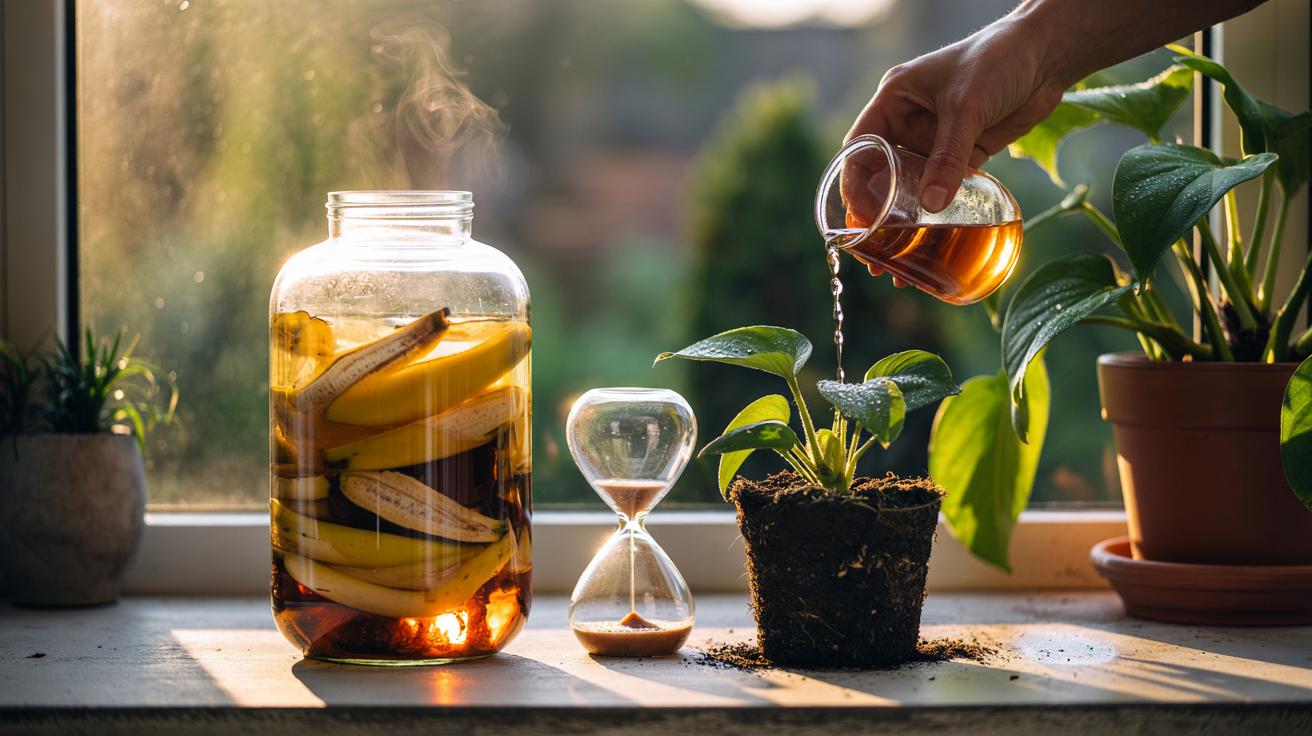
Choose a fresh, blemish-free peel from a ripe banana. Rinse to remove residues. Chop into 1–2 cm strips to increase surface area. Add to a clean jar with 500 ml of lukewarm water per peel. Stir, then cover. Steep for 60 minutes. Do not exceed two hours if you want a fresh, low-odour tonic. Strain through a fine sieve or cloth, pressing lightly to extract the liquid. Discard the spent peel into your compost caddy—don’t bury it in pots.
Application is simple. For a soil drench, dilute the extract 1:1 with water and apply around the root zone until lightly moist. For a foliar spray, strain twice and decant into a spritzer; mist undersides of leaves in the cool of morning or early evening. Avoid midday sun to prevent spotting. Indoor plants appreciate small, repeated doses; outdoor beds can handle a fuller drench. Use the liquid within 24 hours or refrigerate and finish the next day. If it smells fermenty or cloudy, toss it. Clean tools, fresh water, and moderate dosing keep pests and mould at bay while delivering a fast, friendly lift.
What Plants Benefit Most, and When
Container-grown favourites that deplete nutrients quickly are prime candidates. Think tomatoes, peppers, roses, and leafy houseplants like pothos or peace lily. You’ll notice the biggest gains when plants show mild potassium deficiency—browned margins, weak stems, or lacklustre flowering. The tonic suits pre-bud stages and mid-season lulls, when roots need a nudge but a heavy fertiliser could shock. It’s also handy after minor underwatering, when rehydrated roots can re-establish turgor more evenly with a potassium assist.
Go gentle with sensitive species like orchids or salt-intolerant ferns; test on one leaf or one pot first. Seedlings need balanced nutrition and steady moisture more than quick K fixes, so keep doses tiny. Hydroponic systems are precise; skip homemade brews there. Time your applications—every two to four weeks for houseplants, weekly during peak tomato growth, and after heavy rain on pots to replace what washed out. Stop if leaves scorch, growth stalls, or fungus gnats appear; those are signs of over-watering or decaying organics, not nutrient need. Match the method to the plant’s rhythm, and the hour-long soak becomes a subtle but effective tool.
Risks, Myths, and Smarter Alternatives
There’s romance in kitchen-to-garden hacks, but not all are equal. Burying whole peels in pots attracts pests and can steal nitrogen while microbes break them down. The one-hour extract avoids that by delivering dilute, readily available ions without the rot. Still, it’s not a cure-all. Nitrogen remains low, so rapid leafy growth won’t follow. If your soil test reports broad deficiencies, reach for a balanced liquid fertiliser or well-made compost. Pairing the peel tonic with vermicompost tea, used sparingly, provides breadth without heavy salts. When in doubt, compost peels first; they’ll return far more value over weeks than any quick brew provides in a day.
| Method | Speed of Effect | Key Nutrients | Risks | Best Use |
|---|---|---|---|---|
| One-hour peel soak | Fast (same day) | Potassium, traces of P, Ca, Mg | Odour if stored; minor pest attraction if spilled | Quick perk-up for pots and flowering crops |
| Compost/vermicompost | Slow to medium | Broad spectrum, including nitrogen | Over-application can sour media | Season-long soil health and balance |
| Balanced liquid fertiliser | Fast | Complete NPK | Burn risk if overdosed | Correcting clear deficiencies |
| Burying whole peels | Slow | Variable | Pests, nitrogen tie-up, mould | Not recommended in containers |
Used with intention, banana peel water is a neat, thrifty trick. It leans on simple chemistry to supply a modest pulse of potassium that plants can use right away, especially in nutrient-hungry containers. Keep expectations grounded: it complements, not replaces, routine feeding and good soil. Watch your plants, measure results, and refine the dose. Small jars. Short steeps. Clear, fresh liquid. That’s the recipe. The hour you spend extracting today can spare a week of languishing leaves tomorrow. What would you try first—soil drench for your tomatoes, or a cautious foliar mist for your houseplants, and how will you gauge the difference?
Did you like it?4.4/5 (26)