In a nutshell
- 🌱 Used tea leaves add organic matter, retain moisture, and spark microbial activity, offering a gentle nutrient nudge and better soil structure overnight.
- ♻️ Prioritise plastic-free or compostable bags; when in doubt, empty the leaves and bin the casing, removing strings/staples to avoid microplastics and contaminants.
- 🧭 Simple methods: shallow-bury 2–3 cm, scatter under mulch, brew weak tea-water (dilute 1:3), and feed worm bins—about one bag per 3–5 L pot weekly.
- 🌸 Best for acid-loving plants—blueberries, camellias, rhododendrons—while lavender, rosemary, and thyme prefer alkaline conditions; keep tea away from seedlings.
- 🛠️ Prevent odours, pests, and mould by balancing “greens” with carbon-rich browns, covering placements, distributing thinly, and reducing inputs in winter; white fuzz is often saprophytic fungi.
Tonight’s cuppa can do more than warm your hands. It can quietly feed your garden while you sleep. Slip those used tea bags, or just the leaves inside, back into the soil and you’ll be adding gentle nutrients, moisture-holding fibres, and a small army of helpful microbes. The practice is frugal, simple, and surprisingly effective for UK gardeners dealing with tired pots or compacted borders. It turns a daily habit into an overnight soil tonic. Done wisely—choosing safe materials, placing them correctly, and matching acidity to the right plants—tea becomes a subtle but steady accelerator of soil life. Here’s how to do it well, without mess, pests, or plastic.
Why Used Tea Bags Feed the Soil
Tea leaves are plant material. Put back in the ground, they act as mild organic matter that improves structure and boosts microbial activity. Their fibres, largely cellulose, loosen heavy soils and help sandy mixes hold water. The leaves contain small amounts of nitrogen and trace minerals; not enough to replace fertiliser, yet sufficient to nudge the soil food web. As they break down, polyphenols—often called tannins—offer a modest acidifying effect. That’s handy for acid lovers, though most garden soils buffer the change.
There’s also the caffeine question. In high doses it can slow seed germination, but used bags contain very low residual caffeine. Tucked under mulch or blended into compost, it’s rarely a concern for established plants. Keep tea away from tiny seedlings and you remove nearly all risk. The real star is moisture: spent tea leaves absorb and release water, creating a friendlier, more stable microclimate around roots. That encourages earthworms, which in turn aerate the soil and improve drainage. The net effect is subtle. Combined with regular mulching, it adds up.
Safe Materials and What to Avoid
The leaves are the prize; the bag is the question. Some UK tea bags still contain polypropylene fibres that don’t break down. Others use PLA (plant-based plastic), which often needs industrial composting temperatures. Increasingly, brands are switching to “plastic-free” paper or home-compostable fibres, but labels vary. Never bury sealed polypropylene bags. The simple fix: tear open the bag, add the leaves, and bin the casing if uncertain. Remove staples, strings, and glossy tags, which can contain inks or coatings you don’t want in soil.
Flavoured teas can include oils, citrus peel, or sweeteners that attract pests; plain black, green, or herbal leaves are easiest to manage. Skip bags contaminated with milk or sugar—those feed the wrong microbes and can smell. Bleached paper isn’t usually an issue at the tiny volumes we’re discussing, but if you’re building a habit, choose clearly labelled compostable options. When in doubt, use only the loose leaves inside the bag. They’ll vanish into compost or beds far faster, without microplastic worries. This small step keeps the benefits and ditches the baggage—literally.
Overnight Methods: Step-by-Step
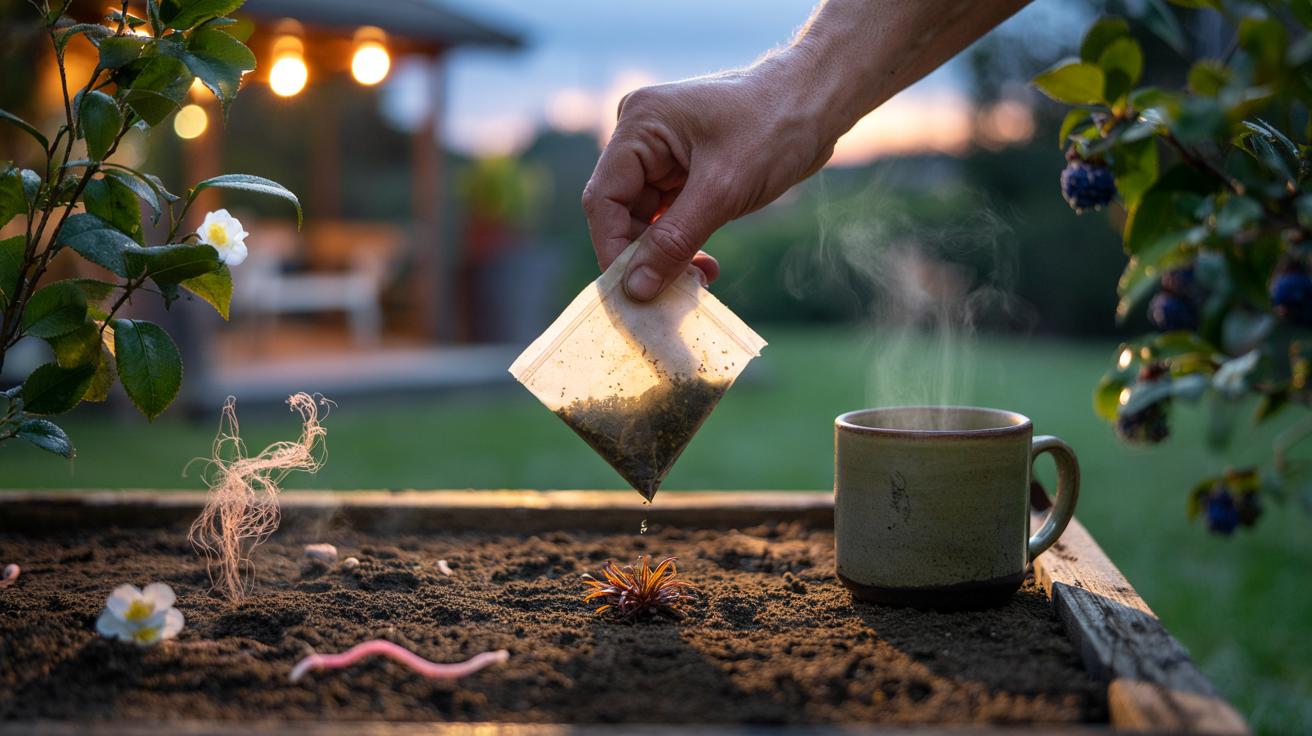
Target simplicity. After your evening brew, squeeze out excess liquid so the leaves are damp, not dripping. For pots, tear open the bag and scatter the leaves on the surface, then cover with 1–2 cm of mulch or compost to deter gnats. For beds, shallow-bury the leaves 2–3 cm deep near the drip line, where feeder roots are busiest. Worm bins love tea leaves; add as a “green” alongside shredded cardboard. One bag per 3–5 litre pot per week is ample. For a square metre of garden, four to six bags a month will do.
If you prefer liquid, make a weak tea-water: steep one used bag in a litre of cold water for 4–6 hours, then dilute 1:3 and apply to soil, not foliage. It’s not a fertiliser, but a gentle microbial kick and moisture top-up. Work clean: avoid bags with dairy, cover placements, and rotate where you add them so decomposition stays balanced rather than clumpy. The aim is quiet support, not a midnight feast for slugs.
| Method | How Much | Placement | Notes |
|---|---|---|---|
| Shallow bury | 1–2 bags per medium pot | 2–3 cm deep at root edge | Cover to prevent pests |
| Surface under mulch | Thin scatter of leaves | Even layer, then mulch | Best for containers |
| Cold tea-water | 1 bag per litre, dilute 1:3 | Soil only | Not a fertiliser, gentle booster |
| Compost/worm bin | Small handful mixed in | Blend with “browns” | Speeds microbes, reduces odour |
Plants That Love Tea and Those That Don’t
Think acidity. Tea nudges pH down a touch, so acid-loving plants respond well: blueberries, azaleas, camellias, hydrangeas (blue forms), rhododendrons, and many ferns. Roses often enjoy the extra organic matter too. In pots, ericaceous compost plus small, regular doses of tea leaves can sustain a lively microbial community between seasonal feeds. Herbs like basil and coriander tolerate light additions, but they prefer balanced mixes and good drainage over tinkered pH.
Be cautious with Mediterranean shrubs that lean alkaline—lavender, rosemary, thyme, and santolina. They’ll accept tiny amounts if soils are free-draining, yet repeated applications can edge them out of comfort. Brassicas are usually fine in beds, but don’t aim tea at seedlings or freshly sown rows; caffeine and sudden microbial spikes can stress delicate roots. Match the plant to the practice. If you’re unsure, trial one corner of a bed, observe growth and smell, and adjust. Soil is local, and your garden’s response is the best guide.
Troubleshooting Odours, Pests, and Mold
Bad smells come from imbalance. Too many tea leaves without enough carbon-rich material (dry leaves, shredded paper, straw) creates a soggy, anaerobic patch. Mix in browns, and bury lightly. Fruit flies? Cover with 2 cm of compost or bark. Slugs snooping around? Avoid dumping in one spot; distribute thinly and keep the area mulched but tidy. Always remove strings, staples, and labels. Cats digging? Water in your additions and use twiggy mulch as a deterrent.
White fuzz on leaves is typically harmless saprophytic fungi—signs of decomposition, not disease. Turn the soil gently or add a sprinkle of dry material. In winter, decomposition slows, so reduce frequency; feed the compost heap instead, then use finished compost in spring. Indoors, where fungus gnats thrive, keep tea additions minimal and always covered. If anything looks off—sticky, smelly, or attracting pests—pause, dry out the area, and restart with smaller amounts. The principle is simple: small, regular, covered, and balanced.
Tea-bag gardening is a quiet craft: patient, thrifty, gently ecological. You’re turning everyday leaves into soil life, improving structure and moisture while keeping waste out of the bin. It won’t replace a balanced feeding regime, but it will make your compost and mulch work harder, especially for acid-lovers and container plants. Choose plastic-free, use only the leaves, and cover your additions. That’s the whole trick. As you brew tonight’s tea, will you save the leaves and give your soil a little midnight supper—and if you do, which corner of the garden will you treat first?
Did you like it?4.5/5 (22)